
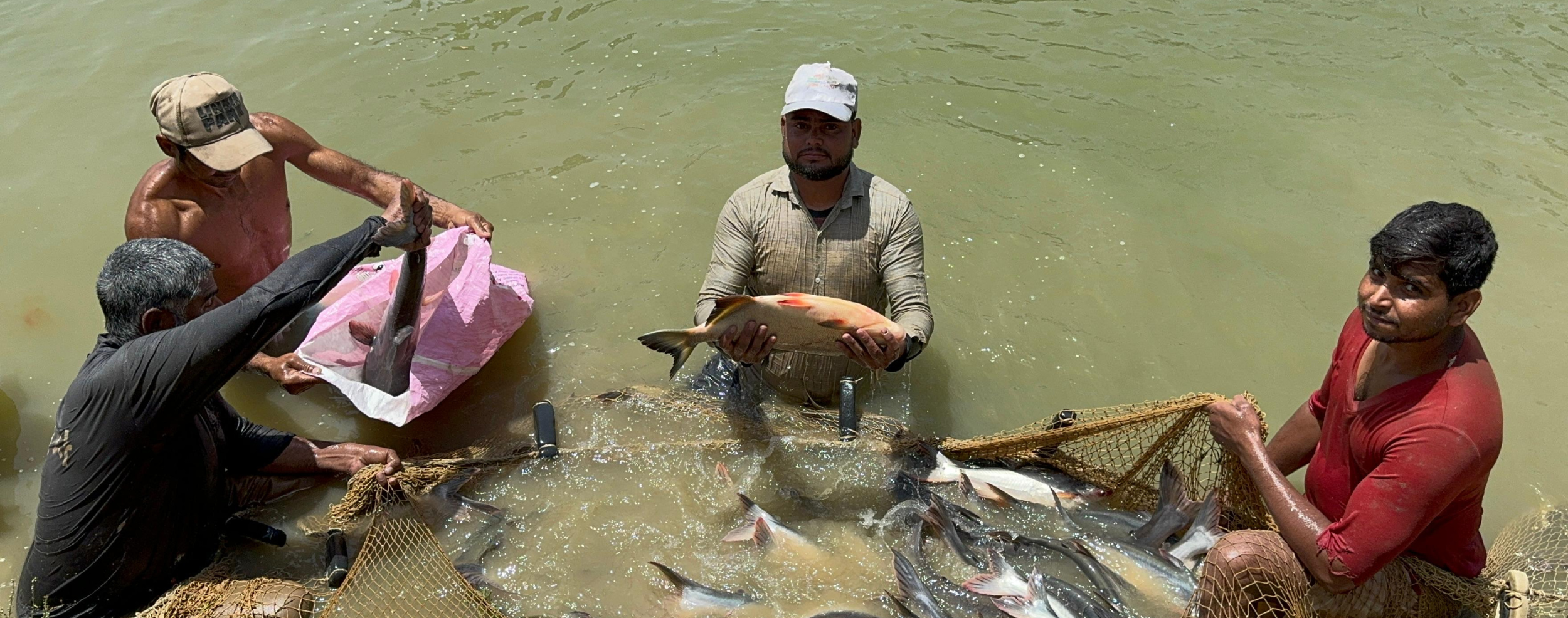
Scientific Fish Farming Techniques
Aquaculture, commonly known as fish farming, has emerged as one of the fastest-growing sectors in agriculture. With increasing demand for high-quality protein and sustainable food sources, adopting scientific fish farming techniques has become essential for achieving higher productivity, improved fish health, and greater profitability.
This article provides a detailed overview of modern, research-based fish farming practices designed to optimize output and ensure long-term sustainability.
1) Pond Preparation and Management
Proper pond preparation is the foundation of successful fish farming.
Key Steps:
- Thorough cleaning and drying of the pond
- Application of lime to maintain optimal pH levels
- Use of organic and inorganic fertilizers to stimulate plankton growth
- Maintaining an ideal water depth of 1.5–2 meters
Effective pond management promotes natural food availability and creates a healthy environment for fish growth.
2) Water Quality Management
Maintaining optimal water quality is critical for fish survival and growth.
Essential Parameters:
- pH Level: 6.5–8.5
- Dissolved Oxygen (DO): Above 5 mg/L
- Temperature: 25–30°
Scientific Practices:
- Installation of aeration systems to maintain oxygen levels
- Regular monitoring using water testing kits
- Use of biofilters and probiotics to improve water quality
Consistent water quality management reduces stress and enhances growth rates.
3. Selection of Quality Fish Seed
The success of fish farming largely depends on the quality of fish seed (fingerlings).
Best Practices:
- Procure seed from certified and reputable hatcheries
- Select disease-free, active, and uniform-sized fingerlings
- Choose species based on local climate and market demand
Commonly Cultured Species:
- Rohu (Labeo rohita)
- Catla (Catla catla)
- Tilapia (Oreochromis niloticus)
- Pangasius (Pangasianodon hypophthalmus)
High-quality seed ensures better survival rates and faster growth.
4. Scientific Feeding and Nutrition Management
Proper feeding is essential for maximizing fish growth and minimizing operational costs.
Feeding Guidelines:
- Provide nutritionally balanced feed with 20–30% protein content
- Feed at fixed intervals to maintain consistency
- Avoid overfeeding to prevent water pollution
Advanced Techniques:
- Use of floating or extruded feed for better monitoring
- Implementation of automatic feeding systems
- Monitoring Feed Conversion Ratio (FCR) for efficiency
Optimized feeding strategies improve growth performance and profitability.
5. Disease Prevention and Health Management
Disease outbreaks can significantly impact production and profitability.
Preventive Measures:
- Maintain clean and hygienic culture conditions
- Conduct regular health monitoring
- Implement quarantine protocols for new stock
Common Diseases:
- Bacterial infections
- Fungal diseases
- Parasitic infestations
Early diagnosis and timely treatment are crucial to minimize losses.
6. Integrated Fish Farming Systems
Integrated fish farming involves combining aquaculture with other agricultural practices to enhance resource efficiency.
Examples:
- Fish-cum-poultry farming
- Fish-cum-duck farming
- Fish-cum-agriculture systems
This approach allows for nutrient recycling, reduces input costs, and generates multiple income streams.
7. Biofloc Technology
Biofloc technology is an innovative and sustainable aquaculture method that utilizes microbial processes to maintain water quality.
Advantages:
- Reduced water usage
- Conversion of waste into microbial protein (floc)
- High stocking density
This method is particularly suitable for intensive and small-scale farming systems.
8. Recirculating Aquaculture System (RAS)
RAS is a highly advanced aquaculture system where water is continuously filtered and reused.
Key Features:
- Reduced water usage
- Conversion of waste into microbial protein (floc)
- High stocking density
This method is particularly suitable for intensive and small-scale farming systems.
Conclusion
The adoption of scientific fish farming techniques is essential for achieving sustainable growth in modern aquaculture. By focusing on water quality management, quality seed selection, balanced nutrition, and advanced technologies such as Biofloc and RAS, farmers can significantly enhance productivity and profitability.
In an increasingly competitive market, integrating traditional knowledge with scientific advancements is the key to long-term success in fish farming.